In the Realm of the Selves
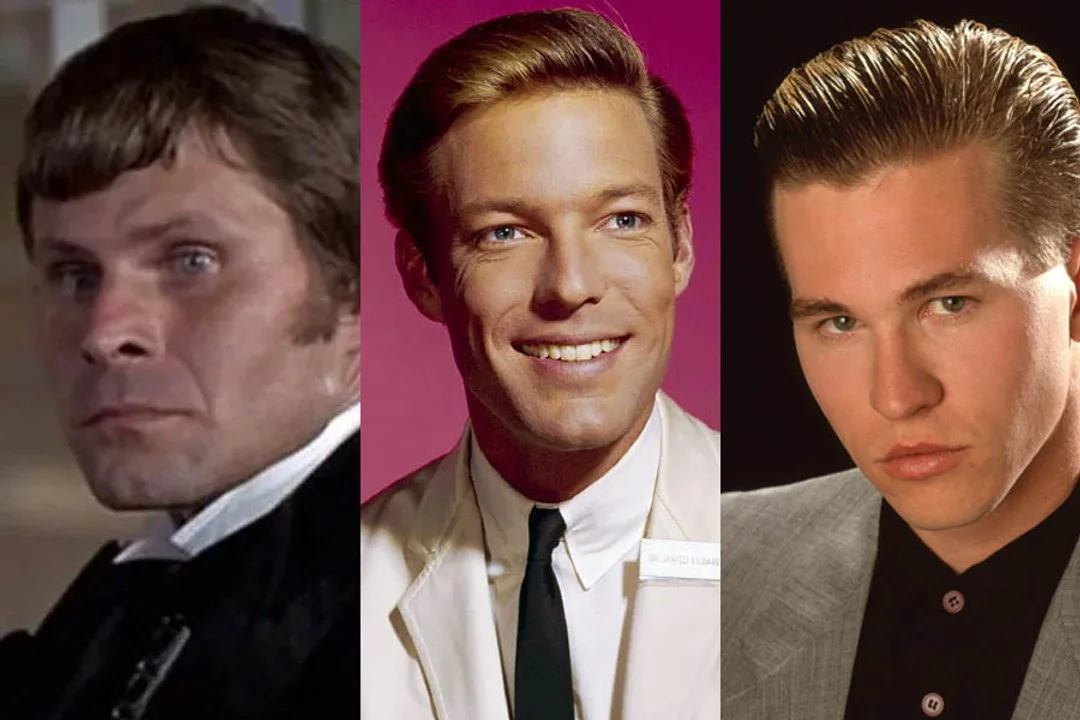
Jett here, we've recently lost three intriguing performers in film: Bruce Glover, Richard Chamberlain and Val Kilmer. Gareth and I will be talking about their careers and unusual acting choices in the next episode, but in the meantime their leaving got me thinking about the ephemeral nature of films and this life.
With that in mind thought I'd post something I wrote a couple of years ago for my film history degree, a mediation of the role of horror films in one's conception of death. It's a bit long, but perhaps you'll find it of some interest. Movies talked about in the piece: Phenomena, Suspiria, The Cabin in the Woods, Only Lovers Left Alive and Train to Busan.
In the Realm of the Selves
What is it to die? Perhaps death is not the final door awaiting all of us at the end, but rather an ongoing process that exists throughout our lives. What if there is no “us” to go “to the valley below”, as the Bob Dylan song would have it, but rather an ever-shifting, fungible sense of self that dies a hundred times during our lifetime? This view of the “end” comes to the forefront when watching films classified as existing in the “horror” genre. In the cinema of the distraught, in pictures of the terrible such as Dario Argento’s Suspiria, Jim Jarmusch’s Only Lovers Left Alive, Drew Goddard and Joss Whedon’s The Cabin in the Woods and Yeon Sang-ho’s Train to Busan we see that there is no actual “thing” as an individual, merely a variable construct of personality that can exist only in relation to others.
It makes sense that horror films, (those pictures that devote themselves more to physical death other film specialties such as romantic comedies, family dramas and the like), are so explicit when it comes to examining the lack of any “real self” that its protagonists possess. In the horror genre “real” death is ever-present, so it seems like a germane editorial and creative choice to make the death of the “self”, (as in a change of personality, or sense of self or being), a counterpoint to the often visceral endings we see on screen.
In Suspiria, a jumbled, gothic confection of color, blossoming, (near putrid), sexuality and outrageous gore, the idea of self is subsumed to a collective, namely a gaggle of oddly immature dance students holed up in a creepy, baroque school in Baden-Württemberg, Germany. One wonders, watching this colorful Italian shocker, whether there is a defined idea of self at all pictured in the film. Though we watch several people dispatched in the most graphic way possible, (have we ever seen a closeup of a knife striking a still-beating heart in cinema before, the effect is almost the as if one is watching a surgical documentary), there is never a sense of great loss, merely that various members of the dance “collective” are now absent. In Suspiria the self is made up a group of people, no one individual stands out, (though the film does start dramatically with the focus on the ostensible protagonist, Suzy Bannion, played by Jessica Harper, an actress whose career seems to have been derailed by the fact that she is one of three actresses, the other two being Brooke Adams and Karen Allen, who are of near similar age and appearance and clearly were up for the same parts during the start of their working lives).
The film shifts continually to different characters, often for great lengths of time, (the death of the blind pianist Daniel, played by Flavio Bucci, for instance, takes the greatest amount of screen time of any dispatch in the picture), so much so that Suspiria seems to forget that Suzy Bannion is supposed to be the star. Perhaps, as noted above, it is because there is no genuine individual in the film, only a group of young people who, together, form a collective consciousness. With this in mind it makes sense that the arguably most striking character in the film is one we almost never see, the witch Helena Markos, (who founded the dance academy decades earlier). Only a witch, (a being with supernatural powers), is a true individual, and her death at the end is the only true ending. At the finish of the film we realize the “Tanz Academie” would have continued, (as a bee-hive does even if a few bees die), but the “queen” has died and so must the school, (it’s no coincidence that a later Argento film, Phenomena, features a young girl, (Jennifer Connelly, looking very much like a young Karen Allen, Brooke Adams or Jessica Harper), who can communicate with insects, Argento’s work seems to be rooted in the idea of self as emerging from, (or being part of), a collective.
In Drew Goddard and Joss Whedon’s “dad thriller”, (that is a movie for the middle-aged white American man that reads work like the Jack Reacher series for its escapist pleasures), The Cabin in the Woods, there is not so much a collective consciousness amongst the characters in the film as no real consciousness at all. We find as the film unfolds that our heroes, played by beautiful hunks of beefcake as the Marvel Cinematic Universe’s Chris Hemsworth and dreamy doctor Jesse Williams from Grey’s Anatomy, aren’t really personalities at all, but rather constructs manipulated into well-worn horror film tropes by worker bees toiling underground acted by favorite sad-sack character actors Richard Jenkins and Bradley Whitford, (think of The Cabin in the Woods as the television show The Office, but with monsters). The picture makes explicit that there is no real self at all, just a collection of traits that can vary depending upon the needs of whatever particular system we’re trapped in as humans living in the 21st century. As Gerry Canavan writes in his essay for Marquette University, "Something Nightmares Are From": Metacommentary in Joss Whedon' s The Cabin in the Woods:
For the whitecoats, the extreme events befalling the teenagers upstairs are just another unpleasant day at the office. The characters of the “downstairs” plot have orchestrated everything that is happening upstairs, from first arranging the rental to manipulating the behavior of the principals through everything from pheromone mists and temperature control to controlling mood lighting to (in the case of the blonde teenager selected to embody the “Whore”) toxic hair dye to make this monogamous and intelligent college student both sluttier and stupider as required by narrative cliché. The cabin, we further discover, is but the American headquarters of a much larger global operation; throughout the film we see glimpses of the simi lar projects happening in other locations around the globe, operating according to the narrative and generic conventions of those traditions. (Canavan 7)
There is no “self” at all in The Cabin in the Woods, merely functionaries doing their job, (serving the office that in turn serves the “old gods”), and those they manipulate, all are trapped in a complex system, just as the young dancers of Suspiria are trapped in an abusive dance academy.
At first watch one might assume that that the languid, yet glamourous vampires of director Jim Jarmusch’s Only Lovers Left Alive, played by the seemingly “in real life” immortal Tilda Swinton and another MCU escapee Tom Hiddleston demonstrate a true life, a true sense of self, being as they are self-contained and ageless. Yet if there is never any change, (change of self, change of circumstance), then how can one be truly alive? Watching Only Lovers Left Alive we realize that Eve and Adam, (played by Swinton and Hiddleston respectively), are two characters trapped in amber, they’re as butterflies with wings pinned in a dusty, old volume that no one, (no one truly alive), will ever open. Adam and Eve seem not to have kept “with it” or evolved at all. As Steven Shaviro writes his post Only Lovers Left Alive for the blog The Pinocchio Theory:
It’s noteworthy how, musically as well, there is no reference to any post-1970 African American music; Adam and Eve debate the relative merits of Motown and Stax-Volt, but the only more recent American bands mentioned are — significantly enough — the White Stripes (at one point they drive by the house in Detroit where Jack White lived as a child) and the White Hills. When people say that “everybody left” Detroit, what they mean, of course, is that most of the white people did. Adam lives in the ruins of a decrepit white culture, and he seems unable to recognize that anything else might be going on. (Shaviro)
So, we see in these films, and horror cinema in general, that the self is not fixed, it can be part of a collective as Suzy Bannion is in Suspiria, determined by others, or by an unescapable system, as the protagonists, both above and below, are, in The Cabin in the Woods or ossified to such a degree it counts not as a “living self” at all like the near-desiccated lovers Adam and Eve in Only Lovers Left Alive. There is another way of being and narrative that explores the evanescent nature of self that we find in horror, (and most classical narratives as well), that we find in work such as Train to Busan. In this critical and commercial blockbuster an emotionally absent father, Seok-woo, played by a dashing Gong Yoo, transforms himself through adversity, (in this film’s particular case this adversity manifests itself as a horrific fast-paced zombie apocalypse overtaking South Korea), and, by the film’s end, finds a way to selflessly care for others, (most concretely his own daughter), something that didn’t seem possible at the start of the picture. At the culmination of the picture there is a dual transformation, a dual death, Seok-woo is a new man having found, if not joy, then at least solace, through putting other’s needs above his own, and in doing so kills off his old self just as his “real self”, (his actual flesh and blood), dies as well. We find here at the end of Train to Busan the platonic ideal of the idea of the horror film. Of course we, as humans, fear death, (no wonder many people don’t want to go to therapy, as changing yourself is a way of casting off, committing to execution, a version of the self), yet Train to Busan shows us death, or transformation, is the highest ideal. Will McKeown in his article Self-sacrifice in Train to Busan for the New Cinemas: Journal of Contemporary Film writes of this sacrifice at the end of the picture that:
Seok-woo has many chances to say a meaningful farewell to Soo-an. It is easy to watch the sequence and see it as though the parting dialogue comes from both parties and is poignantly expressed. However, this impression is given by the intensity of Soo-an's heartfelt resistance to her father's departure (and by extension the exemplification of the emotion-based motivational framework). Instead, the interaction is more one-sided. He starts by explaining the locomotive's controls to Seong-kyeong and then implores his daughter to reach Busan, the ultimate objective. What is clear from this is that, of the limited time Seok-woo has left to spend, he spends it ensuring the survival of Soo-an and Seong-kyeong and further pressurizing them with the burden of his legacy to necessitate his sacrifice being worthwhile. This is how self-sacrifice, which could seem so against the agenda of survivalism is, in fact, founded on and perpetuated from the need to survive. (McKeown)
The “character” that needs to survive here is not the Seok-woo that started the movie, rather it is the “transformed” self, a new man, and hence his desire to survive, (meaning the desire to pass along the life lessons his new man has learned), are as strong as possible. Overall, these works of cinema as a whole tell us not fear death, whether it’s the death of the psychological self or the physical self, rather let us embrace and love the possibilities of our new formed selves and go forward, with fingers no longer held up in front of our eyes, to watch the horror in front of us. Perhaps, knowing this, we should call these films not horrors, but romances?